⚡ VoltSens Verified Automotive Research & Analysis
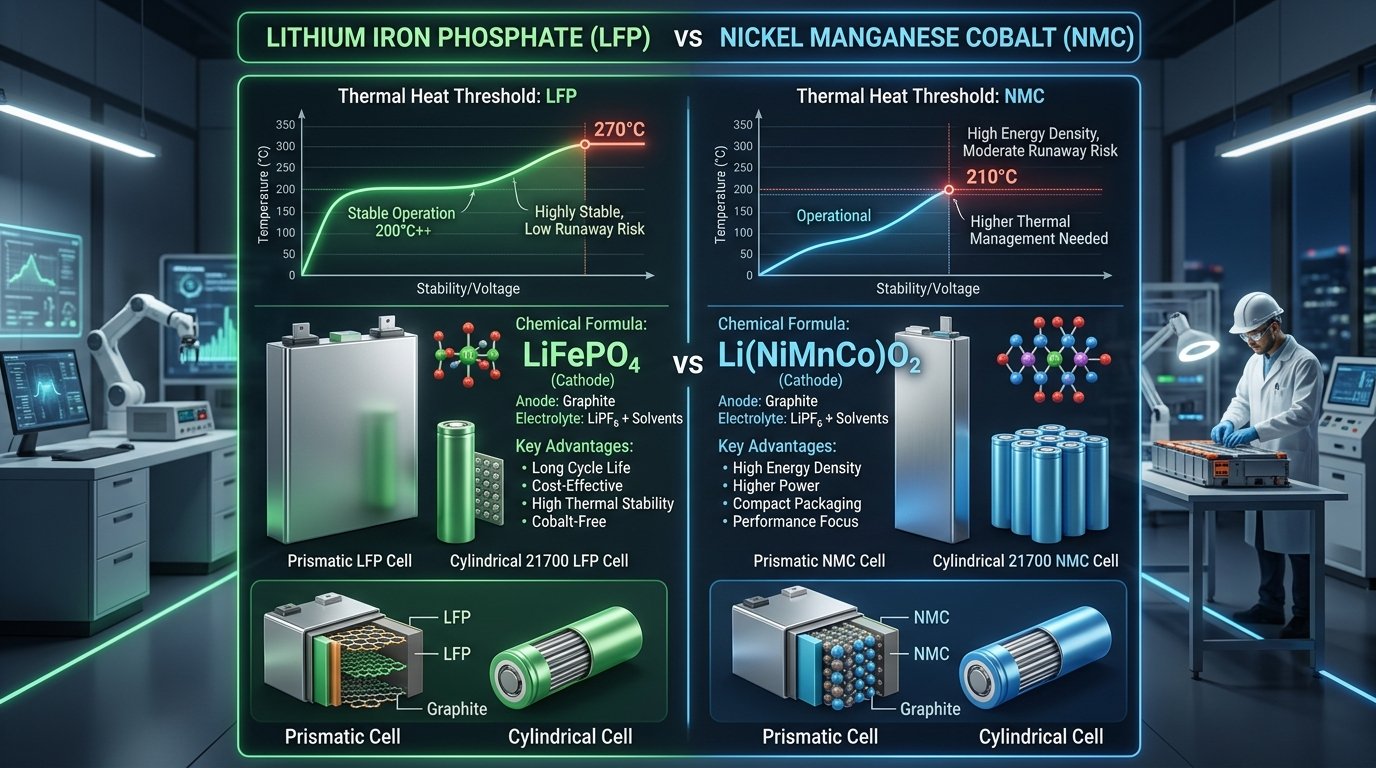
Battery chemistry determines thermal safety, weight, and lifespan. In Indian summers where ambient temperatures cross 45°C, understanding LFP vs NMC chemistry is essential for every EV buyer.
Head-to-Head Comparison Table
| Feature | LFP (Lithium Iron Phosphate) | NMC (Nickel Manganese Cobalt) |
|---|---|---|
| Thermal Runaway Threshold | ~270°C (Ultra Safe) | ~210°C (Requires Active Liquid Cooling) |
| Charge Cycles (Lifespan) | 2,500 - 3,500 cycles (~10-12 yrs) | 1,000 - 1,500 cycles (~5-7 yrs) |
| Energy Density | Lower (~160 Wh/kg) | Higher (~240 Wh/kg) |
| 100% Charge Degradation | Negligible (Safe to charge 100%) | Higher (Recommended 80% daily cap) |
Frequently Asked Questions (FAQ)
What is the main topic covered in this article about Battery Tech?
Lithium Iron Phosphate (LFP) vs Nickel Manganese Cobalt (NMC) — thermal stability in Indian summers (45°C+), cycle lifespan, and brand adoption matrix.
How does this relate to EV running costs in India?
Electric propulsion consistently delivers running costs between Rs 0.30/km and Rs 0.50/km for scooters and Rs 0.80/km to Rs 1.20/km for cars, representing an 80%+ savings over fossil fuels.
Where can I find more Battery Tech guides on VoltSens?
VoltSens has 40+ comprehensive guides across EV Cars, Scooters, Battery Tech, and Charging categories. Visit our Battery Tech category page for related in-depth articles.