⚡ VoltSens Verified Automotive Research & Analysis
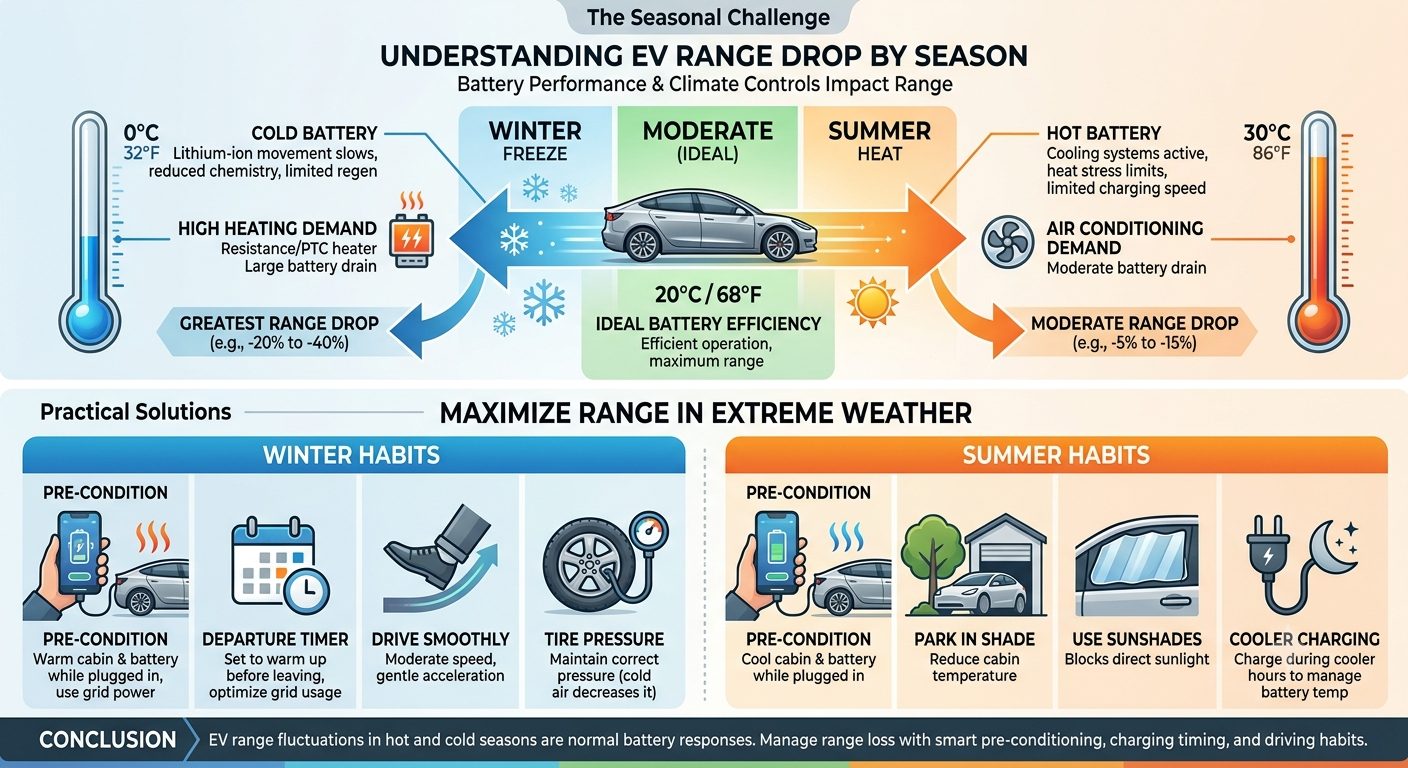
Lithium-ion batteries operate with maximum chemical efficiency within a sweet spot of 20°C to 30°C. In North India where temperatures swing from 3°C in January to 48°C in June, thermal management systems consume extra energy to protect the cells.
The Summer Range Penalty (40°C+)
In summer, the vehicle's air conditioner and battery active cooling pumps run at maximum speed. Running the cabin AC at 18°C on full blower consumes 1.5 kW to 2.5 kW of continuous electrical power, reducing driving range by 15% to 22%.
Pre-Conditioning: The Secret to Full Range
While your EV is still plugged into the home charger in the morning, turn on the cabin AC via your smartphone app 10 minutes before leaving. This cools the battery and cabin using grid power without draining your battery range!
Frequently Asked Questions (FAQ)
What is the main topic covered in this article about Battery Tech?
Why does your electric vehicle show 20% less range during extreme Indian summers (45°C) and North Indian winters (4°C)? Learn how to optimize your driving style.
How does this relate to EV running costs in India?
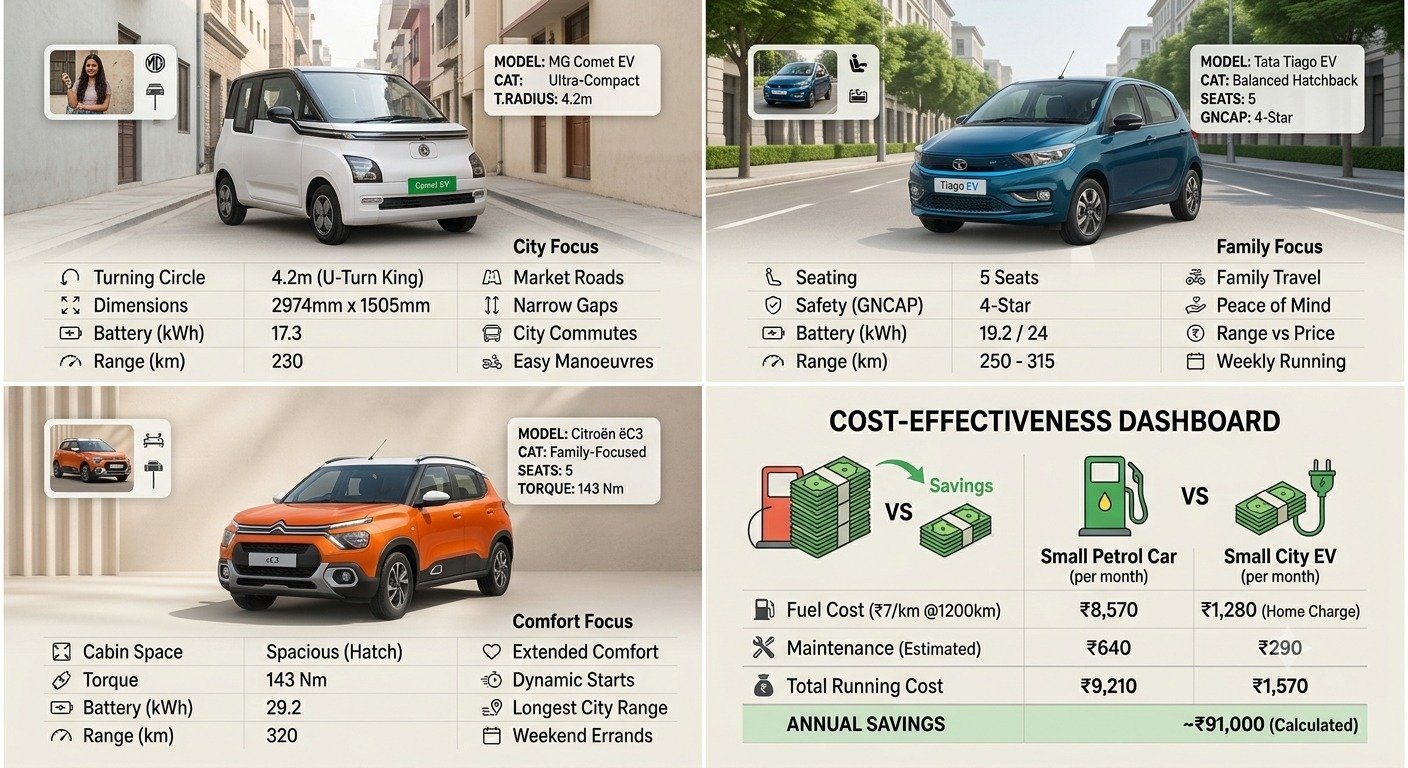
Electric propulsion consistently delivers running costs between Rs 0.30/km and Rs 0.50/km for scooters and Rs 0.80/km to Rs 1.20/km for cars, representing an 80%+ savings over fossil fuels.
Where can I find more Battery Tech guides on VoltSens?
VoltSens has 40+ comprehensive guides across EV Cars, Scooters, Battery Tech, and Charging categories. Visit our Battery Tech category page for related in-depth articles.